Should I Buy Life Insurance With a Long-Term Care Rider?
Long-term care riders are policy additions that can pay for assisted living expenses, such as caregivers or nursing homes. With the rising... Read More


Compare life insurance quotes and find the best rates for a policy.
Life insurance can help protect your family financially if anything happens to you, but it’s important to make sure you’re not overpaying for the coverage you need.
Life insurance lets you leave a sum of money to someone you choose after you pass away.
Most people buy life insurance so that their dependents can pay for the funeral and any other end-of-life expenses. It's also common to buy a policy to help children pay for college or help a spouse afford the bills.
Here's what makes up a life insurance policy:
The amount and type of life insurance you need depends on what you want the payout to do for your loved ones.

For example, if you have no debt and your family wouldn't need much financial help if you pass away, you might decide to skip life insurance altogether. Or you could choose to get a policy just to leave a financial gift to your family, friends or a charity.
But if you have a spouse who would need help paying the mortgage or children who would need money to go to college, you might want to get a policy with a bigger payout.
To decide how much life insurance you need, start by adding up your current and future financial obligations. This can include expenses such as:
After you have figured out your financial situation, add up your current assets such as savings and college funds. Finally, subtract your current assets from the obligations. That gets you to a target amount for how much life insurance you might need.
Keep in mind that this is a rough estimate for coverage, and it may be useful to purchase slightly more life insurance to compensate for unexpected financial situations that your dependents might face.
Life insurance companies will typically offer two different types of life insurance: term life insurance and permanent life insurance.
A term policy lasts for a set period of time before expiring while permanent plans stay active for your entire life. Some permanent life insurance policies also have a cash value component that grows as you make premium payments.
Term life insurance | Permanent life insurance | |
|---|---|---|
| Period of coverage | Specified term, usually one to 30 years | Lifelong |
| Cash value | No | Yes |
| Average monthly premium | Cheap | Expensive |
Depending on your situation and what the purpose of your life insurance is, the type of life insurance that you need will change.
For example, if you are looking for a cheap policy to cover future financial obligations like college tuition, then choosing a term life insurance policy with a death benefit that matches the total tuition may be the best option. On the other hand, say you have Type 1 diabetes and have had problems with getting approved for life insurance. In this case, a permanent policy like guaranteed acceptance life insurance may be a better option for coverage.
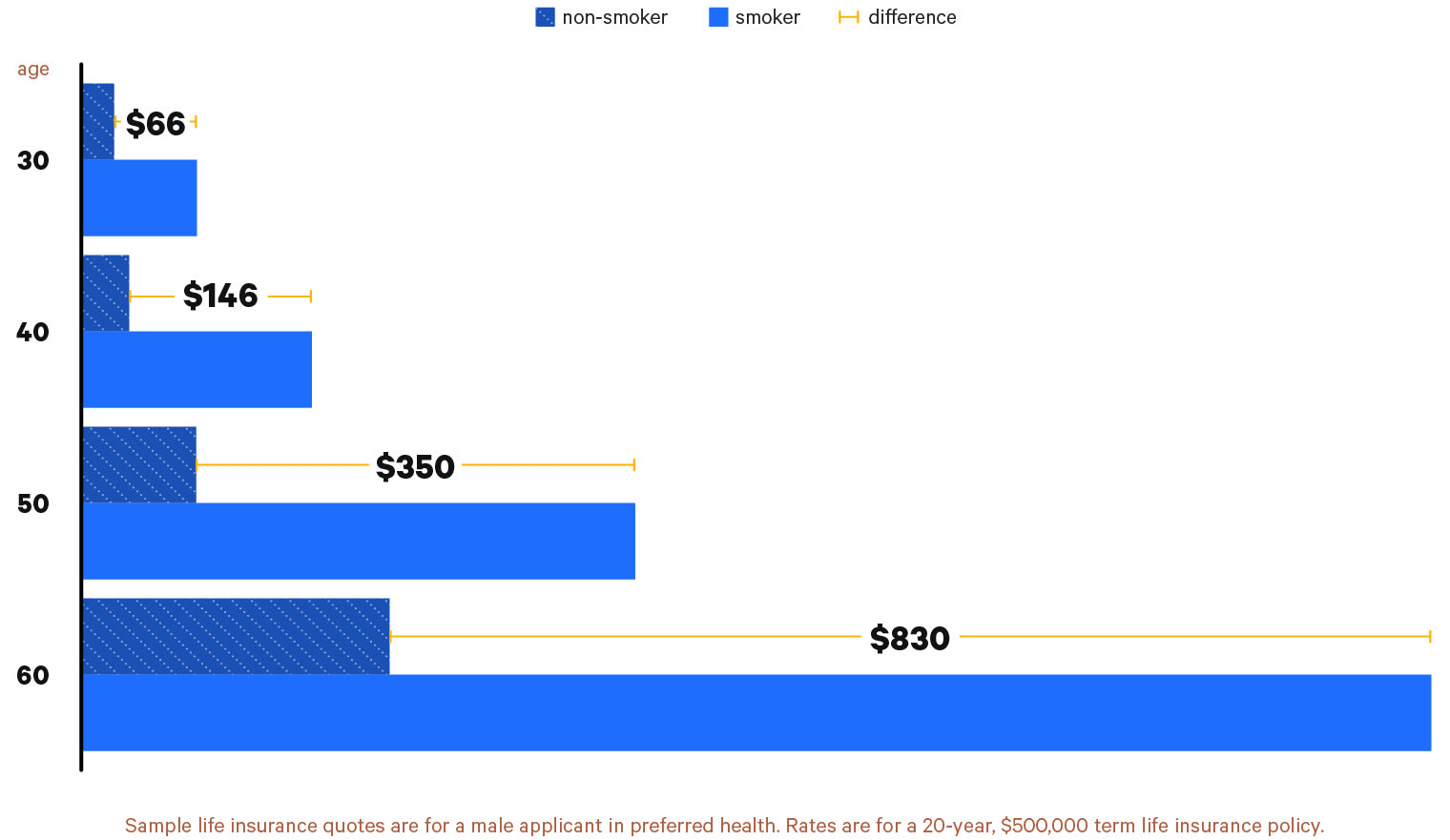
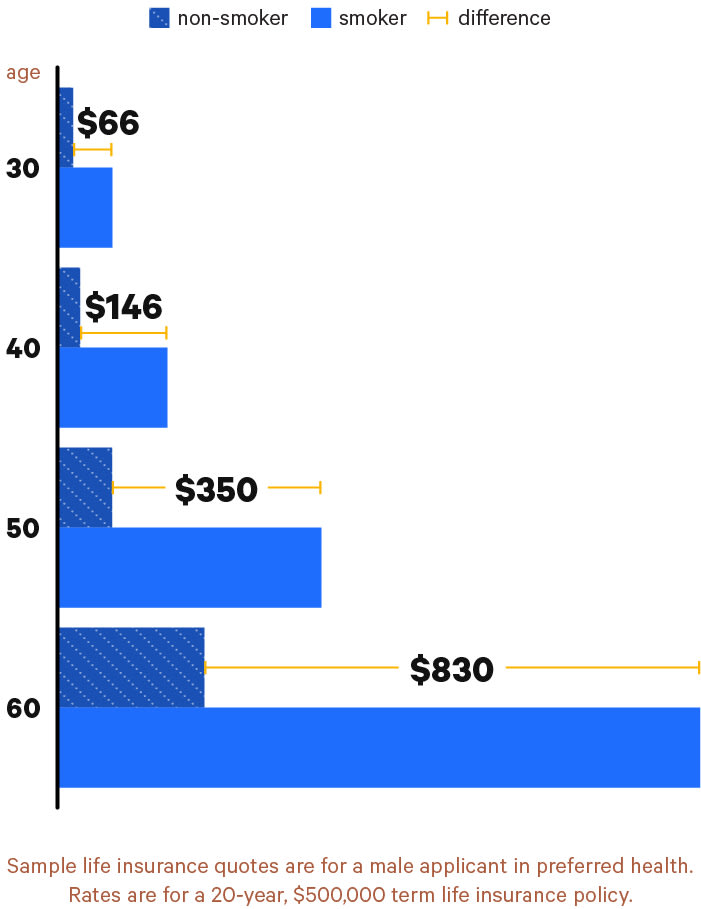
The cost of your life insurance policy depends on a variety of factors including your health, age, and occupation. However, the biggest factor is whether or not you smoke.
Smokers have an average cost of life insurance that is 306% higher when compared to a nonsmoker.
Long-term care riders are policy additions that can pay for assisted living expenses, such as caregivers or nursing homes. With the rising... Read More
Vantis Life is challenging how people think about life insurance. The company aims to prove that planning for the future does not have to... Read More
State Farm, Ethos and AARP/New York life are good options for burial insurance. These plans can help your loved ones pay for things like... Read More
If you're over 60, life insurance can be a valuable tool to give your loved ones financial security. The right life insurance for you... Read More
ValuePenguin recently had the opportunity to speak with Jamie Hale, the CEO and founder of life insurtech (insurance technology) company... Read More
Insurers that offer whole life insurance usually provide three nonforfeiture options: reduced paid-up insurance, cash surrender and... Read More
Adjustable life insurance is a permanent policy with flexible premiums, death benefits and cash value. The policy specifies when these can... Read More
High-risk life insurance is a special category of insurance for people who are a greater risk. Four major factors — health, hobbies,... Read More
In life insurance, having an "insurable interest" in a person means you have enough interest, or stake, in the person's finances that you... Read More
Single premium life insurance policies offer the insured the ability to make one lump-sum premium payment in exchange for a guaranteed... Read More
Decreasing term insurance is a life insurance product that provides decreasing coverage over the term of the policy. A decreasing term life... Read More
Life insurance rates are higher if you have overweight or a high BMI, since companies take into account your weight and height. But unless... Read More

Senior Writer
Cate Deventer is a Senior Writer who specializes in health insurance, Medicare, auto and home insurance. She's been a licensed insurance agent since 2011.
She started her insurance career working as a customer service agent for State Farm. She later moved to an independent agency, where she worked with several insurance companies and hundreds of clients. She quoted policies, filed claims and answered insurance questions. In 2021, she pivoted her career and began writing about insurance for Bankrate. She moved to ValuePenguin in 2023 and began writing about health insurance and Medicare.
Cate has a passion for helping readers choose insurance to fit their needs. She enjoys knowing that her research and knowledge help people choose insurance products that make a positive difference in their lives.
How insurance helped Cate
Cate used her health insurance knowledge to navigate a surgery in 2023. Understanding how her policy worked let her focus on recovery instead of worrying about bills.
Expertise
Credentials
Referenced by
Education
