
Best Cheap Home Insurance Companies in Virginia (2026)

State Farm typically has the cheapest homeowners insurance in Virginia, at $988/yr, on average. | ||
Home insurance in Virginia costs an average of $2,481/yr, 4% higher than the national average. | ||
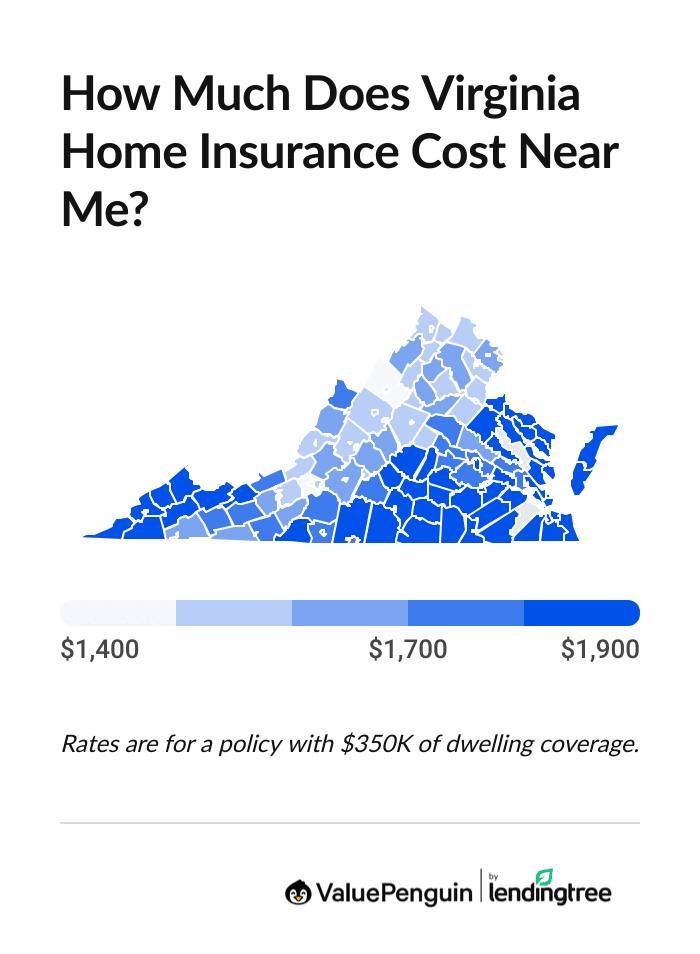
People living along Virginia's Eastern Shore usually pay more for home insurance, with average rates as high as $3,223/yr. |
State Farm typically has the cheapest homeowners insurance in Virginia, at $988/yr, on average. | ||
Home insurance in Virginia costs an average of $2,481/yr. But people living on the Eastern Shore could pay more than $3,000/yr. |
Find Cheap Home Insurance Quotes in Virginia
Who has the best cheap homeowners insurance in VA?





Who has the cheapest homeowners insurance in Virginia?
State Farm and Cincinnati have the cheapest homeowners insurance rates in Virginia.

Find Cheap Home Insurance Quotes in Virginia
-
State Farm offers the cheapest overall home insurance rates in Virginia. State Farm costs around 56% to 71% less than the Virginia state average, depending on how much coverage you need.
However, State Farm doesn't always offer coverage for homes near the coast, especially in high-risk areas. So, people living along the Eastern Shore or Chesapeake Bay may need to shop for insurance elsewhere.
- Cincinnati also has very affordable home insurance in Virginia, with rates around 39% to 50% cheaper than the statewide average. And Cincinnati is more likely to cover coastal homes, so it could be the cheapest option for some people.
VA homeowners insurance quotes by dwelling coverage limit
$200,000
$350,000
$500,000
$1 million
Company | Annual rate | ||
|---|---|---|---|
| State Farm | $740 | ||
| Cincinnati | $832 | ||
| Farm Bureau | $1,306 | ||
| Mercury | $1,426 | ||
| Nationwide | $1,440 | ||

| Universal | $1,851 | |
| Allstate | $1,938 | ||
| Auto-Owners | $2,450 | ||
| Erie | $2,985 | ||





Key takeaways
- Home insurance rates in Virginia went up by only 3.9% in 2025, after back-to-back years of double-digit growth. That's less than the 2025 national average increase of roughly 5.6%.
-
Water causes more damage to Virginia homes than any other type of damage. This is largely because of burst pipes, leaky roofs and overflowing appliances, which are typically covered by home insurance.
However, tropical storms, hurricanes and nor'easters are also common in Virginia. These weather events cause high winds, heavy rainfall and storm surges, which can all damage Virginia homes.
Basic home insurance doesn't cover weather-related flood damage, so you'll need to buy a separate flood insurance policy if you live in an area with a high flood risk.
Best homeowners insurance in VA for most people: State Farm

-
Annual cost$988Average rate for a $350,000 home
-
Monthly cost$82Average rate for a $350,000 home
-
AverageCustomer complaints

Cheapest homeowners insurance in Virginia Beach
State Farm has the cheapest home insurance for most people living in Virginia Beach. However, it may not offer coverage to homes in very high-risk areas. This could include oceanfront neighborhoods like Croatan Beach or low-lying areas like Bay Island.
Company | Annual rate | |
|---|---|---|
| State Farm | $957 | |
| Cincinnati | $1,564 | |
| Nationwide | $2,198 | |
| Farm Bureau | $2,264 | |
| Mercury | $2,662 | |
| Allstate | $2,964 | |
|
| Universal | $3,111 |
| Auto-Owners | $4,283 | |
| Erie | $5,274 | |
Rates are for a policy with $350,000 of dwelling coverage.
Best for high-value homes in VA: Cincinnati

-
Cost for a $500,000 home$1,942/yrAverage rate for a $500,000 home
-
Cost for a $1 million home$3,738/yrAverage rate for a $1 million home
-
LowCustomer complaints
Cheapest homeowners insurance in Richmond, VA
Company | Annual rate | |
|---|---|---|
| Cincinnati | $754 | |
| State Farm | $1,011 | |
| Farm Bureau | $1,259 | |
| Mercury | $1,506 | |
| Nationwide | $1,704 | |
| Allstate | $2,031 | |
|
| Universal | $2,474 |
| Auto-Owners | $2,552 | |
| Erie | $3,193 | |
Rates are for a policy with $350,000 of dwelling coverage.
Best coverage options: Nationwide

-
Annual cost$1,991Average rate for a $350,000 home
-
Monthly cost$166Average rate for a $350,000 home
-
HighCustomer complaints
Top-rated homeowners insurance in Virginia
Farm Bureau has the best-rated home insurance in Virginia.
Farm Bureau offers the best combination of affordable rates and reliable customer service in Virginia. Chubb and Nationwide also have high customer satisfaction scores.
Best home insurance companies in VA
Company |
Rating
|
Complaints
|
|---|---|---|
| Farm Bureau | Low | |
| Chubb | Low | |
| Nationwide | High | |
| Allstate | Average | |
| State Farm | Average | |
| Cincinnati | Low | |
| Auto-Owners | Low | |
| Mercury | Low | |
| Erie | Low | |
| Universal | High |
How much does home insurance cost in Virginia?
Virginia property insurance costs an average of $2,481 per year.
That's 4% more expensive than the national average of $2,395 per year.
Dwelling coverage | Average rate |
|---|---|
| $200,000 | $1,663 |
| $350,000 | $2,481 |
| $500,000 | $3,390 |
| $1 million | $6,129 |
Home insurance in Virginia is about average compared to its neighboring states. For example, a policy in Kentucky costs an average of $3,158 per year, while West Virginia home insurance costs around $1,917.
Homeowners insurance rates in Virginia by city
McGaheysville, a rural mountain community in the Shenandoah Valley, is the cheapest city for home insurance in Virginia.
Home insurance in McGaheysville costs an average of $1,393 per year.
Locustville is the most expensive city in Virginia, at $3,223 per year on average. Locustville sits on the Delmarva Peninsula, which is bordered by Chesapeake Bay and the Atlantic, so homes in this area are prone to damage from hurricanes and tropical storms. That's likely why homeowners insurance in Locustville costs 30% more than the state average.
Although State Farm has the cheapest home insurance rates in Virginia overall, Cincinnati is the cheapest company in 85% of cities and towns across the state.
State Farm is the cheapest company in the rest of the cities, many of which are on or near the coast. However, State Farm doesn't always offer home insurance to people living directly on the coast, so Cincinnati may be the cheapest option for some people in these cities, too.
Find Cheap Home Insurance Quotes in Virginia
Cheapest Virginia home insurance rates by city
City | Average rate | Cheapest company | Cheapest rate |
|---|---|---|---|
| Abingdon | $1,695 | Cincinnati | $824 |
| Accomac | $2,887 | State Farm | $941 |
| Achilles | $2,708 | State Farm | $1,014 |
| Adwolf | $1,696 | Cincinnati | $774 |
| Afton | $1,522 | Cincinnati | $805 |
| Alberta | $1,999 | Cincinnati | $879 |
| Aldie | $1,522 | Cincinnati | $679 |
| Alexandria | $1,579 | Cincinnati | $686 |
| Altavista | $1,724 | Cincinnati | $840 |
| Alton | $1,892 | Cincinnati | $886 |
| Amelia Court House | $1,841 | Cincinnati | $908 |
| Amherst | $1,593 | Cincinnati | $806 |
| Amissville | $1,552 | Cincinnati | $771 |
| Ammon | $2,205 | Cincinnati | $760 |
| Amonate | $1,828 | Cincinnati | $872 |
| Andover | $2,381 | Cincinnati | $904 |
| Annandale | $1,628 | Cincinnati | $699 |
| Appalachia | $1,935 | Cincinnati | $904 |
| Appomattox | $1,756 | Cincinnati | $830 |
| Aquia Harbour | $1,474 | Cincinnati | $774 |
| Ararat | $1,904 | Cincinnati | $854 |
| Ark | $2,691 | State Farm | $1,014 |
| Arlington | $1,510 | Cincinnati | $674 |
| Aroda | $1,622 | Cincinnati | $866 |
| Arrington | $1,677 | Cincinnati | $807 |
| Arvonia | $1,825 | Cincinnati | $789 |
| Ashburn | $1,412 | Cincinnati | $679 |
| Ashland | $1,656 | Cincinnati | $800 |
| Assawoman | $2,952 | State Farm | $1,014 |
| Atkins | $1,727 | Cincinnati | $774 |
| Atlantic | $2,778 | State Farm | $917 |
| Augusta Springs | $1,537 | Cincinnati | $784 |
| Austinville | $1,764 | Cincinnati | $839 |
| Axton | $1,802 | Cincinnati | $812 |
| Aylett | $1,823 | Cincinnati | $901 |
| Bacova | $1,568 | Cincinnati | $797 |
| Bailey's Crossroads | $1,617 | Cincinnati | $699 |
| Banco | $1,532 | Cincinnati | $866 |
| Bandy | $1,879 | Cincinnati | $872 |
| Barboursville | $1,558 | Cincinnati | $887 |
| Barhamsville | $1,807 | Cincinnati | $850 |
| Barren Springs | $1,731 | Cincinnati | $829 |
| Baskerville | $1,944 | Cincinnati | $886 |
| Bassett | $1,746 | Cincinnati | $784 |
| Bastian | $1,796 | Cincinnati | $904 |
| Basye | $1,536 | Cincinnati | $754 |
| Batesville | $2,061 | Cincinnati | $802 |
| Battery Park | $2,362 | State Farm | $1,014 |
| Bealeton | $1,472 | Cincinnati | $618 |
| Beaumont | $1,966 | Cincinnati | $781 |
| Beaverdam | $1,689 | Cincinnati | $800 |
| Bedford | $1,705 | Cincinnati | $791 |
Rates are for a policy with $350,000 of dwelling coverage.
What home insurance coverage is important in Virginia?
Virginia's location on the East Coast of the U.S. puts homes at risk for damage from hurricanes and tropical systems.
While they happen mostly in the summer and fall, other storms like nor'easters can strike any time of year. It's important for Virginia homeowners to have protection against the wind, rain and flood damage these storms cause.

Does homeowners insurance in VA cover hurricanes?
Homeowners insurance typically covers some, but not all, types of hurricane damage. Your insurance company will usually pay for damage caused by wind, but not weather-related flooding.
Some insurance policies may have a separate hurricane deductible. This is common for coastal homes. Your hurricane deductible is usually a percentage of your dwelling coverage amount and tends to be higher than your regular home insurance deductible.

Is wind damage covered by home insurance in Virginia?
Nearly all homeowners insurance policies cover wind damage.
However, homes with a high risk of wind damage may have a separate wind deductible. That means you could have to pay two deductibles if both the wind and rain from a thunderstorm damage your home. Your wind deductible is typically between 2% and 5% of your dwelling coverage limit.
If your home is more likely to suffer wind damage, you may want to take steps to protect it. You can do this by pruning limbs off nearby trees and having your roof inspected regularly.
High winds caused nearly $66 million of damage to Virginia homes from 2020 to 2025, according to the National Centers for Environmental Information (NCEI). This doesn't include hurricane or tropical storm damage.

Is flood damage covered by home insurance in Virginia?
Standard home insurance covers some, but not all, types of flooding.
Understanding how your home insurance covers flooding is important because water causes more damage to Virginia homes than any other type of damage.
Homeowners insurance doesn't usually cover weather-related flood damage, such as rising rainwater or storm surge from a hurricane. But it does pay for damage caused by a leaky roof, overflowing appliance or burst pipes.
If your home is at high risk for weather-related flood damage, you will need to get a flood insurance policy to cover the damage to your property. You can either get a policy through a private insurance company or from the National Flood Insurance Program (NFIP).
How much is flood insurance in Virginia?
The average cost of flood insurance in Virginia is $755 per year for a National Flood Insurance Program (NFIP) policy.
How to find the best homeowners insurance in VA
The best home insurance companies in Virginia offer a combination of affordable rates, great customer service and helpful coverage.

Find a company that offers the coverage you need. Most standard homeowners insurance policies include the same basic coverage. However, some Virginia homeowners may need more protection.
For example, if you live in an area with a high risk of flooding, you may want a company that offers flood protection. Allstate, Auto-Owners and Chubb all offer flood insurance in addition to standard home insurance protection.
It's important to know what protection you need before you gather quotes. That way you can make sure each company you consider has the right coverage for you.

Compare quotes from multiple companies. The most expensive home insurance company in Virginia costs over four times more than the cheapest company. That's a difference of $3,612 per year.
In addition, every company calculates insurance quotes differently. So the cheapest company for you may be different from that of your neighbors, friends or family.

Look at customer service reviews. Choosing a company with great service reviews can give you peace of mind. That's because you know your insurance company will take care of you in an emergency.
Companies with excellent service typically have easier claims processes after an accident, and you may pay less for home repairs.
Cincinnati, Auto-Owners, Farm Bureau and Chubb have the best-rated customer service in Virginia.
Change in Virginia home insurance cost over time
Home insurance prices are up nearly 39% in Virginia over the last five years.
Virginia homeowners saw their home insurance prices rise the most in 2023 and 2024. Rates went up by around 11% each year. However, home insurance rates began to level out in 2025, with an increase of under 4%.

Home insurance rate increases in Virginia, 2021-2025
Year | Rate increase |
|---|---|
| 2021 | 3.32% |
| 2022 | 4.54% |
| 2023 | 10.79% |
| 2024 | 11.02% |
| 2025 | 3.92% |
Home insurance rate change data was compiled using RateWatch from S&P Global, which uses information from the National Association of Insurance Commissioners (NAIC).
USAA customers saw the smallest rate increase over the last five years, at just 5.5%. That's significantly lower than the company with the second-smallest increase, State Farm, which raised rates 18.7%.
Both Erie and Progressive raised rates by over 80% during the same period.
Frequently asked questions
How much is the average homeowners insurance in Virginia?
Virginia home insurance costs an average of $2,481 per year. That's around 4% higher than the national average of $2,395.
Is home insurance mandatory in Virginia?
The state of Virginia doesn't require homeowners insurance. However, if you have a mortgage, your lender will typically require you to buy a policy.
Who has the best home insurance in Virginia?
State Farm has the best home insurance for most people in Virginia. It has the cheapest rates in the state, along with an excellent app for managing your policy and filing claims online.
How much is home insurance in Virginia Beach, VA?
The average cost of homeowners insurance in Virginia Beach is $2,940 per year. That's $459 per year more expensive than the Virginia average. State Farm is the cheapest option for Virginia Beach homeowners, at $957 per year, on average.
Methodology
To find the best home insurance in Virginia, ValuePenguin compared quotes from the top insurance companies across all Virginia ZIP codes. Rates are for a 45-year-old married man with a good credit score and no prior insurance claims. Quotes are for a 2,105 square foot home built 45 years ago, based on the average home age and size in Virginia.
Quotes include the following coverage limits:
- Dwelling coverage: $200,000, $350,000, $500,000 or $1 million
- Personal liability: $100,000
- Medical payments: $1,000
- Deductible: $1,000
Home insurance ratings are created based on a combination of complaint data from the National Association of Insurance Commissioners (NAIC), the J.D. Power customer satisfaction survey and ValuePenguin's own editorial ratings.
ValuePenguin's analysis used insurance rate data from Quadrant Information Services. These rates were publicly sourced from insurance company filings and should be used for comparative purposes only. Your own quotes may be different.
About the Author

Senior Writer
Lindsay Bishop is a Senior Writer at ValuePenguin, where she educates readers about home, auto, renters, flood and motorcycle insurance.
Lindsay began her career in the insurance and financial industry in 2010. She was a licensed auto, home, life and health insurance agent and held Series 6 and 63 financial licenses.
After a hiatus from the financial sector, Lindsay returned to the industry as a content writer for ValuePenguin in 2021. She enjoys having the opportunity to help readers make smart decisions about their insurance so they can be prepared for anything life throws their way.
When Lindsay isn't writing about insurance, you can find her spending time with family, enjoying the outdoors on Sunday long runs or riding her Peloton.
How insurance helped Lindsay
As a homeowner for 15 years located in South Carolina, Lindsay has plenty of experience navigating the coastal insurance market and managing the claims process. That includes successfully negotiating a full roof replacement claim.
Expertise
- Home insurance
- Car insurance
- Flood insurance
- Renters insurance
- Motorcycle insurance
Referenced by
- CNBC
- Yahoo Finance
- Miami Herald
Education
- BS/BA Economics, University of Nevada Las Vegas
Editorial Note: The content of this article is based on the author's opinions and recommendations alone. It has not been previewed, commissioned or otherwise endorsed by any of our network partners.
